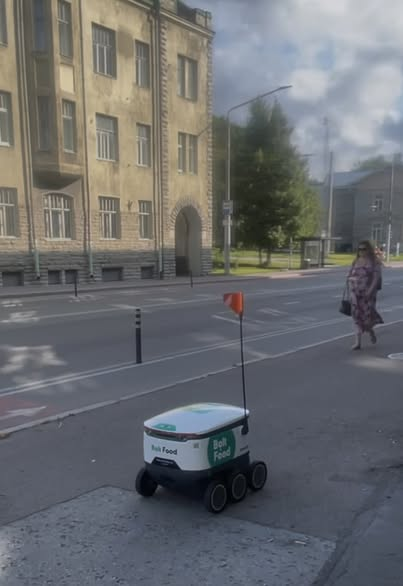
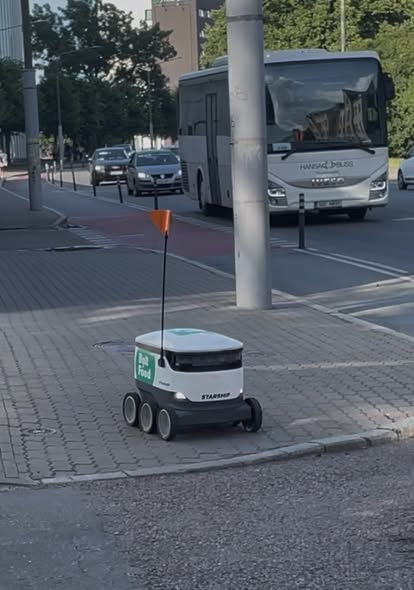
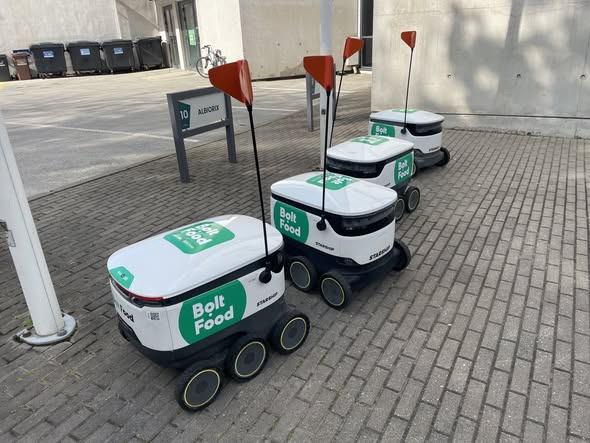
We’ve been following with interest a recent campaign from Living Streets, a UK charity dedicated to promoting pedestrian safety and encouraging walking as a primary mode of transportation. The campaign under the banner ‘Pavement Overload’ addresses concerns regarding the unregulated introduction of delivery robots to our pavements and footpaths.
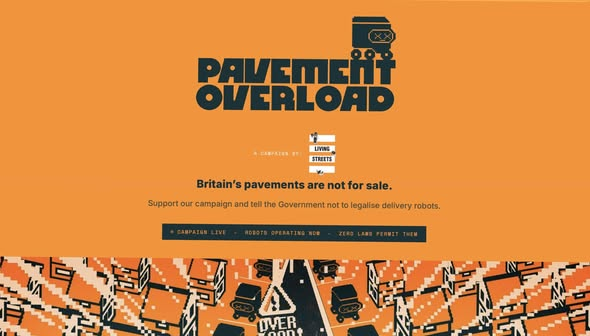
Britain’s pavements and footpaths are already under pressure from pavement parking, street furniture, and other obstructions. There are concerns that the introduction of delivery robots that move unpredictably, sit low to the ground, and cannot be reliably detected by a white cane or guide dog will introduce genuine safety questions that no impact assessment has been required to answer.
The campaign is aiming to force the Government to address the legal vacuum regarding delivery robots and ensure any future regulation puts pedestrians first.
We recently approached Calvin Horner, County Councillor, to find out about Hertfordshire’s policy on this issue. I’ve detailed below the comprehensive response he received back.
“Thank you for your enquiry regarding robot deliveries in Bishops Stortford. I appreciate the resident would like to know our policy and stance on this matter.
Please be advised that we do not currently have a standalone policy permitting general use of delivery robots across Hertfordshire. We have been considering robot deliveries in some detail through the Hertfordshire Living Lab. There is currently no specific national legislation governing autonomous delivery robots on footways, so we have taken a cautious approach and worked through the governance, legal, operational, safety and equalities considerations before allowing a trial to proceed. We have also drawn on experience from other UK areas where the technology is already operating, including Milton Keynes, Northampton, Cambridgeshire and Leeds.
The proposal has been through a substantial Member and officer governance process, including consideration by the Environment, Transport and Growth and Highways Cabinet Panels. This work has informed the governance and safeguards for an initial 18-month, controlled trial with Starship Technologies. A Memorandum of Understanding has also been developed to set out the operating, safety, liability and termination arrangements. Importantly, the trial is time-limited and reversible, and approval of the trial does not in itself constitute approval for wider or permanent deployment.
The trial is planned to commence in Stevenage within defined, geo-fenced operating areas. Routes will be pre-mapped and reviewed by us for highway safety, accessibility, Rights of Way and land ownership considerations. Starship will remain responsible for operating the robots and for the associated operational costs, insurance and liabilities. While we retain its statutory powers and the ability to require changes or suspend or terminate the trial where safety, accessibility, legal compliance or wider public-interest concerns arise.
Accessibility has been an important part of the work. An Equality Impact Assessment forms part of the process, alongside engagement with relevant disability and accessibility groups. We have also developed a specific monitoring and evaluation programme covering pedestrian safety and comfort, interactions with vulnerable users, accessibility benefits, public acceptance, and the effect on local vehicle trips. The current approach is for the robots to operate on footways rather than Stevenage’s cycle network.
The Stevenage scheme is deliberately a controlled trial designed to generate the local evidence needed to inform future policy and decision-making. The learning can also help inform a wider transport policy as our approach to technology and innovation develops.
If the Stevenage trial demonstrates that the technology can operate safely, inclusively, and with appropriate public acceptance, there may be scope to consider trials in other parts of Hertfordshire. Any extension would be evidence-led and subject to the relevant governance, route assessment and approval arrangements; there is no automatic commitment to a countywide rollout.
We have sought engagement with Living Streets as part of developing this work. Living Streets has decided not to participate in the evaluation process, but we will continue to seek views from local accessibility and community groups and, importantly, from residents during the trial. This feedback will form part of the evidence used to assess the scheme.
The public papers and discussions are available below:
· Environment, Transport & Growth Cabinet Panel
· Starship Delivery Robot Trial paper
Ultimately, we have considered the governance and policy implications in detail and are taking a controlled, evidence-led trial-and-evaluate approach before making any decision about wider use.”